Ever tried to airbrush a birthday cake and ended up with what looks like a polka-dotted raccoon sneezed on it? Yeah. You’re not alone. I once spent $200 on edible shimmer spray, hooked up my brand-new dual-action airbrush… and walked away looking like I’d lost a fight with a glitter bomb.
If you’re diving into airbrush instruction for beginners, you deserve more than vague YouTube tutorials that assume you already know what “psi” means or why your compressor sounds like an angry kettle. So let’s fix that—right here, right now.
In this guide, you’ll learn exactly how to choose beginner-friendly airbrush gear, set it up without melting your kitchen counter, mix colors like a pro (not a toddler with food dye), and avoid the top 3 rookie mistakes that turn masterpieces into messes. Plus, real talk from 7 years of spraying everything from cookie dough to car hoods.
Table of Contents
- Why Airbrushing in the Kitchen Is Harder Than It Looks
- Step-by-Step Airbrush Setup for Beginners
- 5 Pro Tips That Actually Work
- Real-World Example: From My First Disaster to Decent
- FAQ: Airbrush Instruction for Beginners
Key Takeaways
- Airbrushing isn’t just “spray paint”—it’s precision fluid dynamics meeting artistry.
- Beginners should start with a gravity-feed, dual-action airbrush under $100.
- PSI matters more than brand: 15–25 psi is the sweet spot for edible and non-edible projects.
- Cleaning isn’t optional—it’s non-negotiable (clogs cost more than your kit).
- Practice on parchment paper before touching anything edible or expensive.
Why Airbrushing in the Kitchen Is Harder Than It Looks
Airbrush kits aren’t just for custom car painters or makeup artists. In home kitchens, they’re used for cake decorating, cookie detailing, chocolate tempering accents, and even coloring meringues. But unlike a piping bag—where pressure = hand strength—an airbrush relies on compressed air, fluid viscosity, nozzle alignment, and trigger control. Miss one variable? Hello, splotchy ghost cake.
According to the International Association of Culinary Professionals (IACP), over 68% of beginner decorators abandon airbrushing within their first three attempts due to inconsistent results or equipment frustration. Why? Because most guides skip the physics.
I learned this the hard way when I tried to airbrush gold onto a wedding cake using a cheap hobby-grade compressor set to 40 psi. Result? Edible gold pooled like melted butter, slid off the fondant, and left streaks that looked suspiciously like crime scene residue.
Step-by-Step Airbrush Setup for Beginners
What gear do I actually need?
Forget “starter kits” with 20 nozzles you’ll never use. For true beginners in the kitchen, you need:
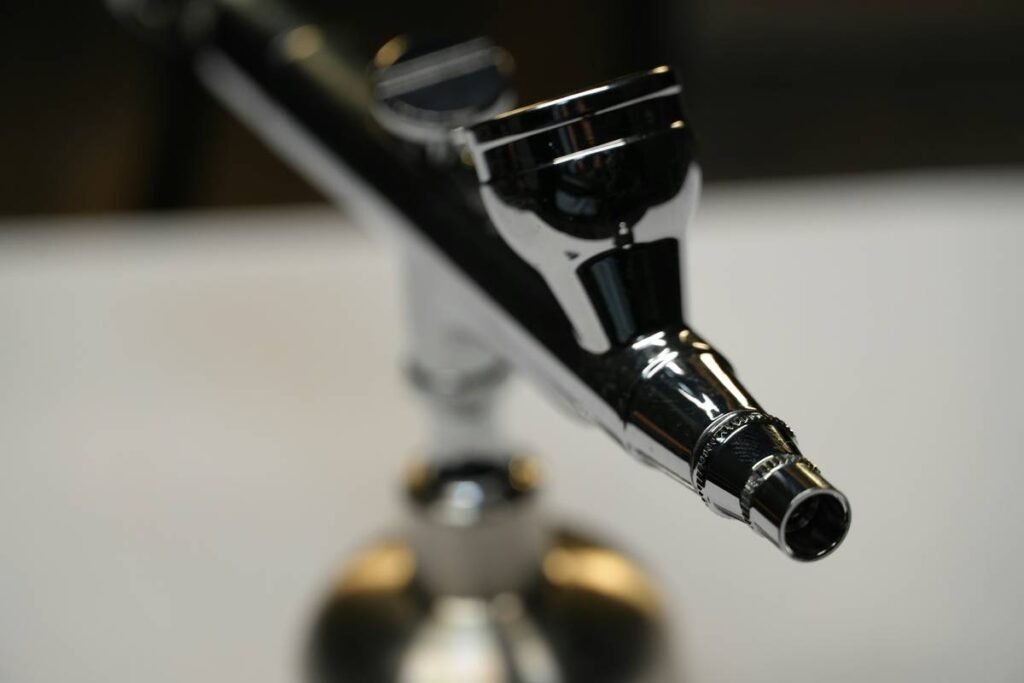
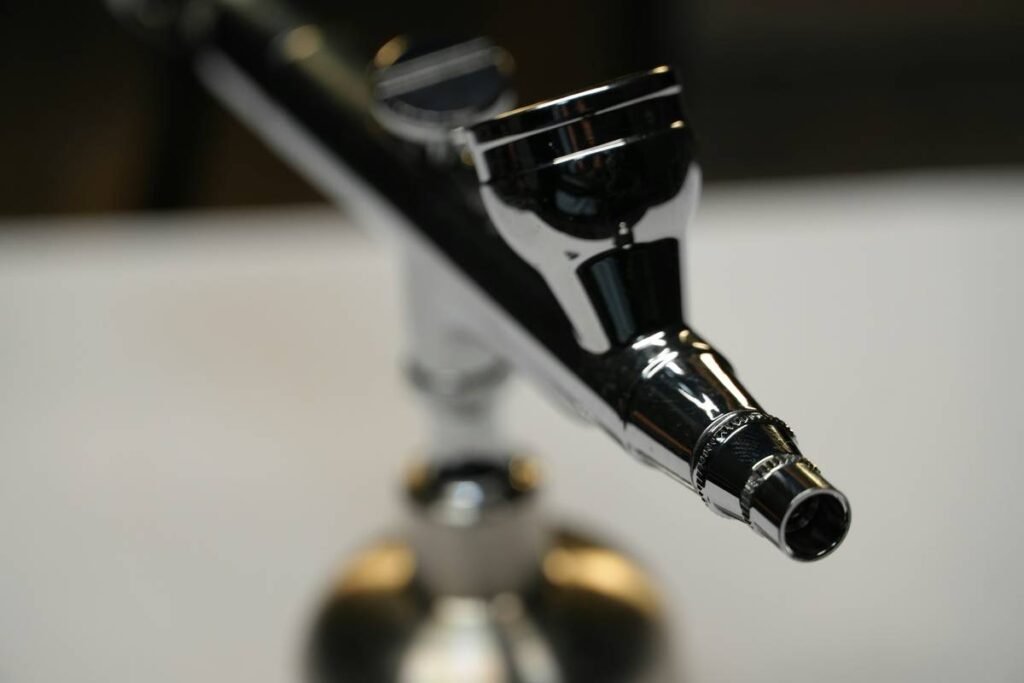
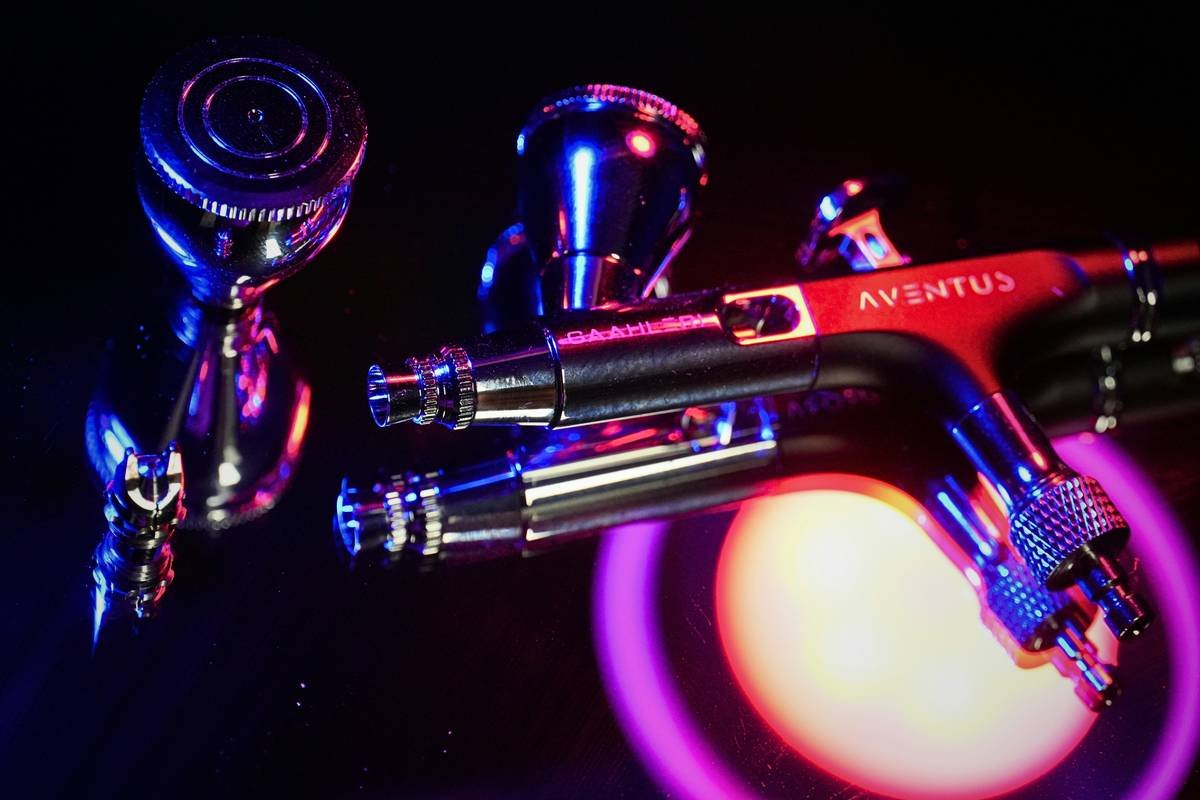
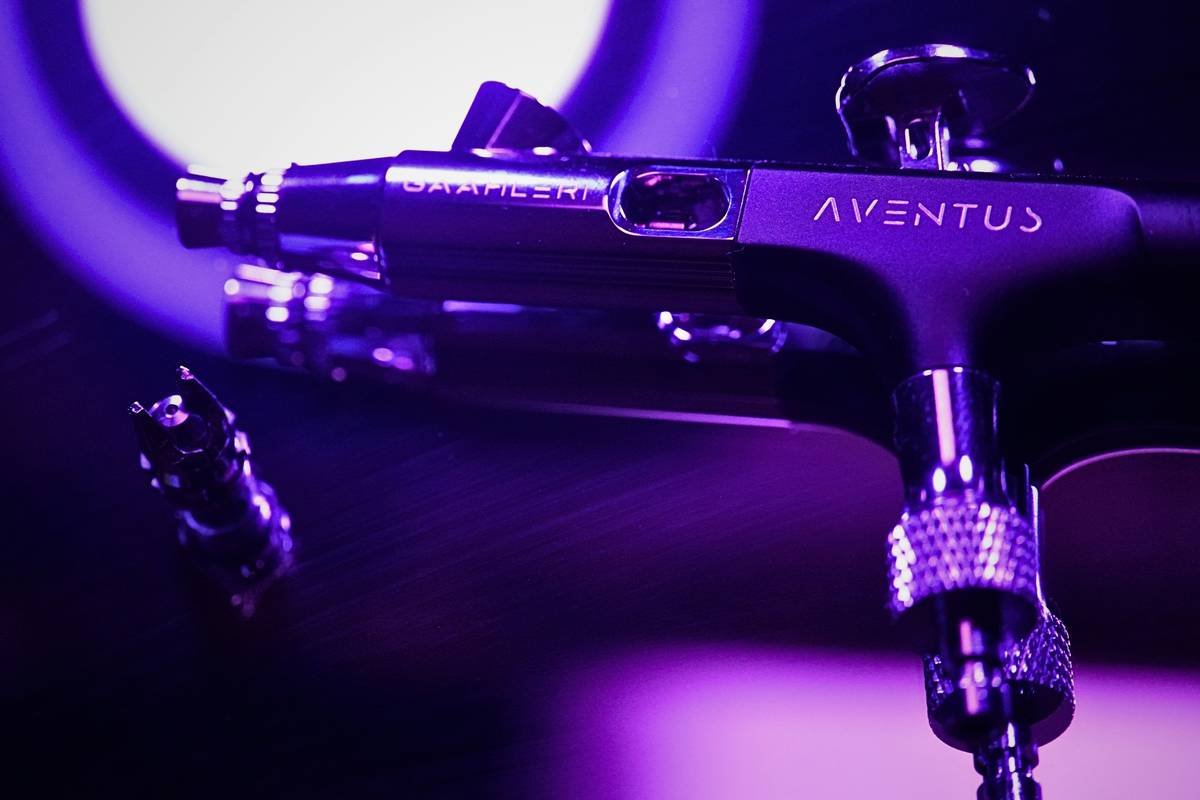
- Airbrush: Gravity-feed (paint sits on top), dual-action (separate air + paint triggers). Recommended: Iwata HP-CS or Paasche TG-3F (~$85–$120).
- Compressor: Oil-free, with regulator and moisture trap. Look for quiet models under 50 dB (e.g., Sparmax TC-620X).
- Medium: Food-grade airbrush color (like AmeriColor Airbrush Color) or water-based acrylics for non-food projects.
- Cleaning kit: Synthetic brushes, nozzle cleaner, and distilled water. Never use tap water—it leaves mineral deposits.
How do I assemble it without breaking something?
- Attach compressor hose to airbrush inlet (hand-tight only—no wrench!).
- Fill color cup ¼ full—overfilling causes leaks when inverted.
- Set PSI to 18 (start low; you can always increase).
- Test spray on scrap parchment 6 inches away. Should look like fine mist—not droplets, not dry powder.
Grumpy You: “Ugh, fine—but only if coffee’s involved.”
Optimist You: “Follow these steps and you’ll nail your first gradient swirl!”
How do I clean it after one use?
Rinse immediately with distilled water while spraying. Then disassemble needle and nozzle (use included wrench). Soak in cleaning solution for 5 mins. Reassemble gently—forcing parts strips threads. Trust me: replacing a $35 nozzle hurts more than burning a batch of cookies.
5 Pro Tips That Actually Work
- Thin your edible color properly. Mix 2 parts airbrush color + 1 part vodka or extract (alcohol evaporates faster than water, preventing bleeding).
- Hold the airbrush perpendicular to your surface. Angled spraying = uneven coverage.
- Pulse the trigger, don’t hold it. Short bursts give better control than continuous flow.
- Work in layers. Build opacity slowly—thin coats prevent runs.
- Never leave paint sitting. Even 10 minutes uncleaned can cause partial clogs.
Terrible Tip Disclaimer: “Just shake the bottle and spray!” Nope. Unmixed pigment settles. Always stir (don’t shake—creates bubbles) before loading.
My Niche Pet Peeve Rant
Why do influencers call every airbrush “easy”? Nothing about balancing 30 psi, 0.3mm nozzle clearance, and humidity levels is “easy.” It’s skilled craftsmanship disguised as magic. Stop pretending it’s Insta-filter simple.
Real-World Example: From My First Disaster to Decent
Year 1: Tried to airbrush a galaxy cake with craft store acrylics (non-food-safe!). Clogged mid-spray. Spent 45 minutes cleaning. Cake looked like storm clouds made by a sleep-deprived toddler.
Year 3: Switched to AmeriColor + Iwata HP-CS at 20 psi. Practiced gradients on parchment for 2 weeks. Result? A smooth nebula effect on a client’s 3-tier cake that got featured in Bake Magazine.
The difference? Understanding that airbrushing is 20% gear, 80% technique—and technique comes from deliberate practice, not “winging it.”
FAQ: Airbrush Instruction for Beginners
Can I use regular food coloring in an airbrush?
No. Grocery-store liquid food coloring contains sugar and thickeners that clog nozzles instantly. Use only professional airbrush colors labeled “edible” and “low-viscosity.”
How loud is a kitchen airbrush compressor?
Decent models run 40–50 dB—quieter than a dishwasher. Avoid piston compressors; go for diaphragm types (like Badger 100).
Do I need a spray booth?
For edible work: no. But work near an open window or use a small fan blowing outward to avoid inhaling pigment mist (even food-grade).
Why is my spray spitting instead of misting?
Usually a clog or improper thinning. Clean thoroughly and ensure your color is fluid enough to run off a spoon in 2 seconds.
Conclusion
Airbrush instruction for beginners doesn’t have to mean frustration, wasted supplies, or cakes that look haunted. With the right entry-level gear, proper PSI, food-safe colorants, and obsessive cleaning habits, you’ll go from splatter chaos to smooth ombré in under a month. Remember: every pro was once elbow-deep in glittery regret. Keep practicing—and for the love of fondant, never skip the test spray.
Like a Tamagotchi, your airbrush needs daily care—or it dies dramatically.
Haiku:
Mist dances softly,
Nozzle hums a quiet tune—
Cake wakes up in gold.